Wastewater treatment technology by carbon adsorption from activated carbon equipment
1 Preface
According to statistics, the annual discharge of industrial wastewater in China is about 8 × 10⁸ m3, which contains not only cyanide and other highly toxic components, but also chromium, zinc, nickel and other metal ions. There are many methods for wastewater treatment, including chemical precipitation, electrolysis and membrane treatment. This paper introduces the adsorption of activated carbon. Activated carbon equipment plays an important role in it. It is the activated carbon produced by the activated carbon production equipment to deal with this problem. The surface area of activated carbon is huge, and has high physical and chemical adsorption functions. Therefore, activated carbon adsorption method is widely used in wastewater treatment. It has the characteristics of high efficiency and good effect.
2 activated carbon
Activated carbon is a special treated carbon, with numerous small pores and huge surface area. The surface area of each gram of activated carbon is 500-1500 square meters. Activated carbon has strong physical and chemical adsorption functions, and also has detoxification. Detoxification is to use its huge area to absorb poison in the micropores of activated carbon, thus preventing the absorption of poisons. At the same time, activated carbon can be combined with a variety of chemicals, thus preventing the absorption of these substances.
2.1 classification of activated carbon
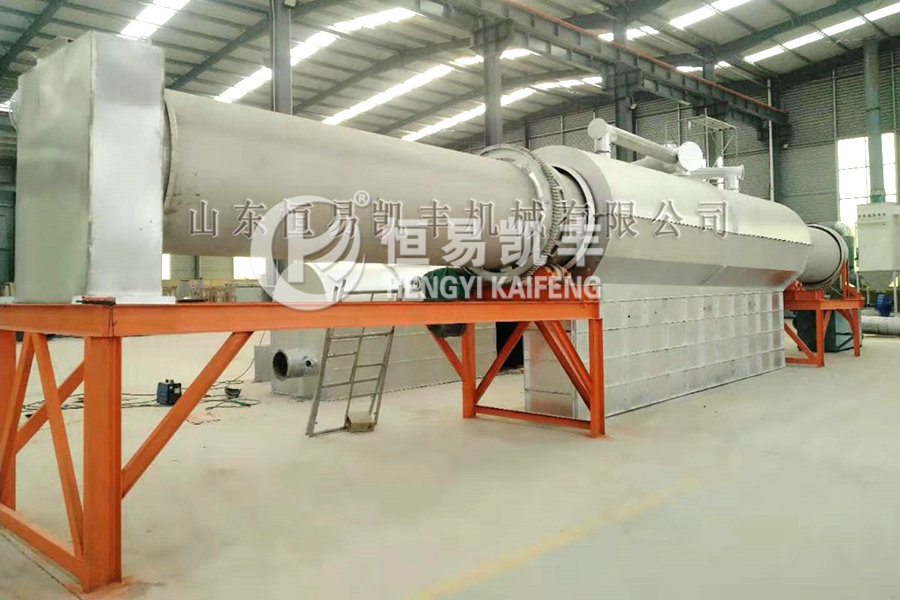
There are many kinds of activated carbon used in production. Generally made into powder or granular.
Powdered activated carbon has strong adsorption capacity, easy preparation and low price, but it is difficult to regenerate and can not be reused.
Granular activated carbon is more expensive, but it can be reused after renewable, and has better working conditions and convenient operation and management. Therefore, granular activated carbon is widely used in water treatment.
2.2 activated carbon production equipment is better than activated carbon adsorption
Activated carbon adsorption refers to the adsorption of one or more substances in water by the solid surface of activated carbon to achieve the purpose of purifying water quality.
2.3 factors affecting activated carbon adsorption
Adsorption capacity and adsorption speed are the main indexes to measure the adsorption process. Adsorption capacity is measured by adsorption capacity. The adsorption rate refers to the mass of adsorbate per unit weight of adsorbent in unit time. In water treatment, the adsorption speed determines the contact time between sewage and adsorbent.
The adsorption capacity of activated carbon is related to the pore size and structure of activated carbon. Generally speaking, the smaller the particle is, the faster the pore diffusion speed is, and the stronger the adsorption capacity of activated carbon is.
The pH value and temperature of the wastewater also affect the adsorption of activated carbon. Activated carbon generally has higher adsorption capacity in acidic condition than in alkaline condition. The adsorption reaction is usually exothermic, so low temperature is favorable for the adsorption reaction.
Of course, the adsorption capacity of activated carbon is related to the concentration of wastewater. At a certain temperature, the adsorption capacity of activated carbon increases with the increase of equilibrium concentration of adsorbed material.
Application of activated carbon in wastewater treatment
Due to the high requirements of activated carbon for water pretreatment and the high price of activated carbon, activated carbon is mainly used to remove trace pollutants in wastewater in order to achieve the purpose of deep purification.
3.1 treatment of chromium containing wastewater by activated carbon
Chromium is a kind of metal raw material used in electroplating. Hexavalent chromium exists in different forms with different pH value in wastewater.
Activated carbon has well-developed microporous structure and high specific surface area, and has strong physical adsorption capacity, which can effectively adsorb Cr (VI) in wastewater. There are a lot of oxygen-containing groups on the surface of activated carbon, such as hydroxyl (- OH), carboxyl (- COOH) and so on. They all have the function of electrostatic adsorption and produce chemical adsorption for Cr (VI). It can be used to treat Cr (VI) in electroplating wastewater, and the adsorbed wastewater can meet the national discharge standard.
The results show that the adsorption performance and removal rate of Cr (Ⅵ) are both effective when the mass concentration of Cr (Ⅵ) in the solution is 50 mg/ L, pH = 3 and the adsorption time is 1.5 h.
Therefore, the process of treating wastewater containing chromium by activated carbon produced by carbonization furnace and activation furnace is the result of the comprehensive effect of activated carbon on the physical adsorption, chemical adsorption and chemical reduction of Cr (Ⅵ) in the solution. The adsorption performance of activated carbon is stable, the treatment efficiency is high, the operating cost is low, and has certain social and economic benefits.
3.2 treatment of cyanogen containing wastewater with activated carbon
In industrial production, cyanide or byproduct cyanide is used in the wet extraction of gold and silver, production of chemical fiber, coking, synthetic ammonia, electroplating, gas production, etc., so a certain amount of cyanogen containing wastewater must be discharged in the production process.
Activated carbon has been used for the purification of wastewater for a long time, and more and more literatures have been reported in the treatment of cyanogen containing wastewater. But because of CN The adsorption capacity of HCN on activated carbon is small, generally 3 mgcn/ GAC ~ 8 mgcn/ GAC (depending on the variety), which is not reasonable in the treatment cost.
3.3 treatment of mercury containing wastewater with activated carbon
Activated carbon has the properties of absorbing mercury and mercury compounds, but its adsorption capacity is limited, so it is only suitable for the treatment of wastewater with low mercury content. If the concentration of mercury is high, it can be treated by chemical precipitation method, and the mercury content is about 1mg/l after treatment, and 2-3 mg/l can be reached at high level, and then activated carbon can be used for further treatment.
3.4 treatment of phenol containing wastewater with activated carbon
Phenol containing wastewater is widely used in petrochemical plants, resin plants, coking plants and refineries. The results show that the adsorption capacity of phenol is reduced because of the high temperature and the adsorption capacity of activated carbon; But the time of increasing temperature to adsorption equilibrium is shortened. The amount of activated carbon and adsorption time were found to be significant, but the removal rate was not changed in acid and neutral conditions; Under the condition of strong alkaline, the removal rate of phenol decreased sharply, the stronger the alkalinity, the worse the adsorption effect.
3.5 treatment of wastewater containing methanol by activated carbon equipment
Activated carbon can absorb methanol, but it is not strong in adsorption capacity, so it is only suitable for the treatment of wastewater with low methanol content. The results of the project operation show that COD of the mixture can be reduced from 40 mg/ l to less than 12 mg/ L, and the removal rate of methanol reaches 93.16% - 100%, and the effluent quality can meet the water quality requirements of the water inflow of the boiler desalted water system.
3.6 deep treatment of oil refinery
After oil separation, air flotation and biological treatment, the oil-bearing wastewater of refinery is treated in depth through sand filtration and activated carbon filtration. The phenol content of wastewater decreased from 0.1 mg/l (after biological treatment) to 0.005 mg/l, cyanogen from 0.19 mg/l to 0.048 mg/l, COD from 85 mg/l to 18 mg / L.
4 prospects
With the progress of science and technology and the special requirements of wastewater treatment, the research of activated carbon has developed from its pore structure and specific surface area to the study of the effect of surface functional groups on the adsorption performance of activated carbon.
For example, ACF has been paid attention by researchers in recent years. Its diameter is generally 5-20 μ m. The preparation principle is the same as that of traditional activated carbon. The fibrous carbon is activated by steam or carbon dioxide above 800 ℃. The pore structure of fiber-like activated carbon is mainly microporous, with few medium pores and few large pores, and the specific surface area can reach 2500m2 / g. It has the characteristics of high adsorption capacity and high conductivity.
The results show that the adsorption capacity of ACF to phenol is 248 mg / g, and the adsorption capacity of ACF is almost unchanged after being saturated with multiple regeneration, and the adsorption performance is better than that of activated carbon. At room temperature, under the condition of acid or neutral, 0.5g activated carbon fiber was added to the simulated wastewater containing phenol with 100ml concentration of 282mg/l, and the phenol removal rate could reach 91% after 30 minutes of constant temperature oscillation.
Recently, it has been found that activated carbon has not only adsorption characteristics, but also catalytic properties. The catalytic oxidation method developed by this method has been paid more and more attention, and its research is also deepening. In order to improve the efficiency of the treatment, the surface structure of activated carbon was changed, the capability of activated carbon was improved and the ideal adsorbent was found.






 HOME
HOME
 Product
 Tel
Tel